
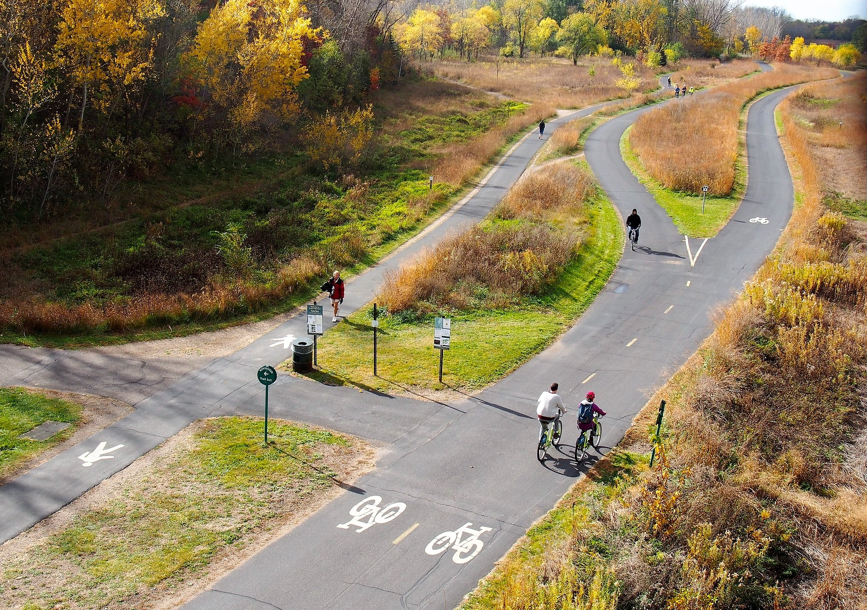
The unassuming bicycle. Who would have thought that any city that’s actively building their bike infrastructure is instead actually building the foundations for a city revitalization like that of which they’ve never seen.
What you have to know is that a bike plan is not simply a bike plan. A bike plan is a climate change plan, it’s a health and safety plan, a quality of life plan, an economic growth plan, a plan to lower municipal budgets, and more. Let me explain.
Climate change plan:
Bicycles, as you know are zero emissions vehicles. Every mile that you bike instead of drive, you reduce your carbon output. Which can be a ton over time. Bikes are instrumental in stopping climate change as the complete transition from internal combustion cars to electric cars will take decades even in the most optimistic of scenarios. But fighting climate change can’t take decades, bikes are already here and readily available to lead the charge for lower emissions.
Health and safety plan:
The health benefits of consistent cycling are no secret, but many people simply don’t do it because it’s not a viable nor safe option to travel. Carving out space for bikes leads some roads to become narrower, or go on a “road diet” if you will. A narrower street slows car speeds, which is crucial if you want to reverse the number of traffic deaths which always seem to be increasing. This is something that cities are constantly talking about, but they fail time and time again. The solution is right in front of our faces: bikes.
Quality of Life Plan:
if you ask any normal person, “What is something that annoys you about living in a city?”. They might say, the traffic, the smog, the noise, etc. That’s not exactly true. Cities aren’t loud, cars are. Cities don’t naturally cause pollution, cars did. We’ve seen this all across the world when covid restrictions hugely impacted the number of people driving, and thus air quality improved noticeably. By taking people out of cars and into bikes, these problems of city life seem to disappear.
Economic growth plan:
You may not realize this, but cars are expensive. They are expensive to buy, to maintain, to fuel, to insure, and prices are only increasing. And the poorest and most vulnerable get hit hard by these transportation costs. It doesn’t have to be this way, planning for bikes gives cheaper transportation options for those who need it the most. You can easily find used bikes for $100 or less, and without fuel, insurance or registration costs, bikes can literally be a lifesaver for millions of struggling people.
Municipal budget plan:
The benefits don’t stop there. For cities, it isn’t just about the benefits for its residents, it’s about saving money in the city budgets. Constructing a bike network is substantially cheaper than building a road network on a mile by mile basis, and repaving bike paths are similarly affordable. The Netherlands, a country famous for its biking culture, achieved it with only a modest annual investment. Not only that, but creating bicycle infrastructure is incredibly fast and effective. Look at Paris, a city that in under 2 years since 2020 has dramatically increased its bike network and is now reaping the rewards and benefits. This can be your city too, if only it had the courage and vision.
 Planning Blog