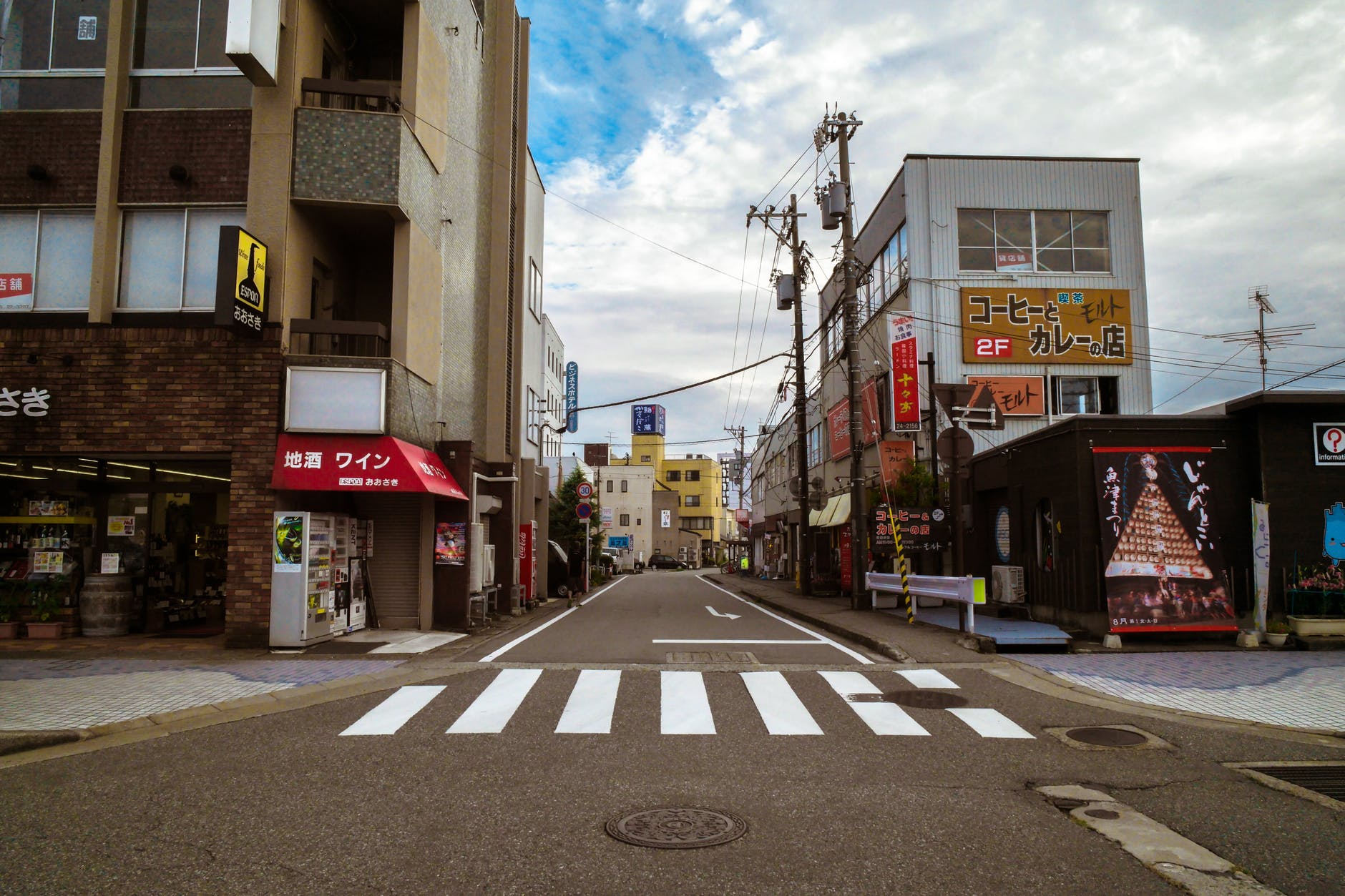
Has Japan unlocked the secret to dense urbanism? How is it that major cities in japan, such as Tokyo, can be so very dense, even while retaining a landscape that isn’t full of 50 story skyscrapers as far as the eye can see. Take for instance the suburb of Kodaira, 12 or so miles from downtown Tokyo. This city is far enough away from the center of Tokyo that is has an abundance of buildings that are only 2 or three stories tall, yet it retains a density that matches or surpasses many major world cities. How is a suburb like Kodaira able to maintain such high densities without feeling like the suburb is in the heart of downtown?
When one looks at space in Kodaira, we can see a major differences in how space is used in Japan vs places like America.
- First, a major difference can be seen when looking at street sizes. Japan has much narrower streets separating their buildings. This calls into question the necessity of traditional street sizes in america. A city can be perfectly functional with much narrower streets, so the question is:why is it necessary to continue making wide streets?
- Secondly, there is a closeness between buildings (but not cramped feeling) with urban design. The houses are closer together that. They are in the west, yet they don’t feel as if they are bunched up together for the express purpose of saving space. They feel correctly placed to encourage sufficient density without the negatives, such as noise that can accompany it. Compare Kodaira with San Francisco’s Outer sunset another suburban style neighborhood that in certain places feels more cramped than Kodaira.
- Third, Kodaira doesn’t have an obsession with yard space, or driveway space. Kodaira is a place that most people don’t have a personal yard or large garages. Yet interestingly, there isn’t a sense of artificiality that you get when you see endless urban concrete without green space to break up the monotony. (Also, see outer sunset). It’s funny how density can be achieved when each residence doesn’t take up a double sized plot of land when half the space is used for front and back yards.
- Finally, parking. Because there exists such an abundance of density, other transportation options are available in Kodaira. A large amount of bicycles and motorcycles/mopeds are visible that are be used instead of cars for personal mobility. Also, because public transportation is an option, it further reduces the need to have a personal vehicle. These facts also reduced the need for parking spaces, which further allows for density to increase. You would only need 4 or 5 parking spaces to satisfy the needs of multiple residences.
What Kodaira proves overall is that density doesn’t have to mean ugly housing, or painful sacrifices, or monotonous design. With proper planning, even suburbs can teach us lessons about density without the negatives.
 Planning Blog